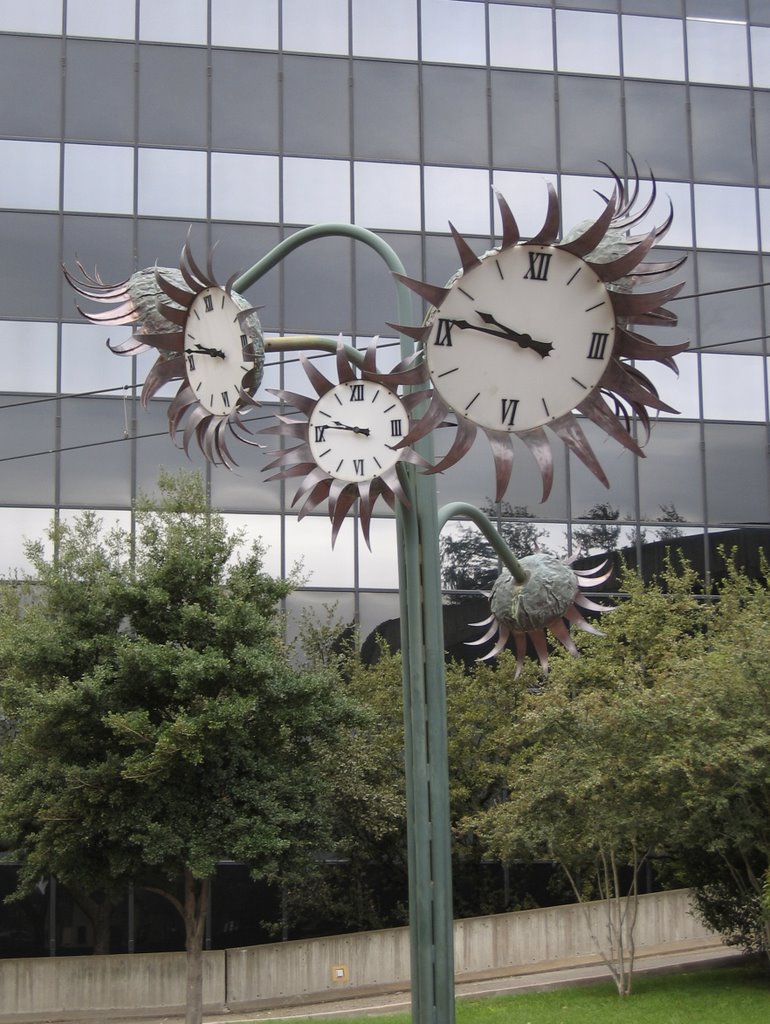
Sunday, May 27, 2007

Our charming government


I never thought I would be singing the praises of the recent postage rate hike, but if I hadn’t had to buy some make-up stamps today I would have missed a great pleasure. I bought two packs of fifty one-cent stamps from a postage machine and they appeared in the most elegant form, folded accordion-style and sealed in a tiny wax-paper envelope with a sticker. To think, people who pay their bills online will never see or feel this.

Above: Pepe fingers the packet, to reveal scale. The photo does not, however, capture the exquisite density of the packet. You must buy one yourself.

Also, I am meaning to post soon about two books: Possession by A. S. Byatt and Instruments in the Redeemer’s Hands by Paul David Tripp. I just haven’t had the time to write something that does them justice. Maybe I should just say I loved them both and highly recommend them, in case I don’t succeed in posting anytime soon.

Saturday, April 21, 2007

Helmet head


I have a principle against putting my picture on my blog, but this is an exceptional occasion, and I think you will be grateful.

As I was riding around the lake today, a little girl and her mother were getting out of their car.

“I like your hair,” the little girl said. Ignoring the amused look on her mother’s face, I thanked her, and she said I was welcome.

I could not suppress my curiosity as I continued around the lake and rode home. What did my hair indeed look like? How much of it was visible? It may be hard to believe, but I had not looked in the mirror back at home as I was gathering it into a ponytail and crowning it with my helmet.

Above is a photograph of my coiffure, essentially as it was seen by my admirer. There was about another hour of high-speed bicycling in a strong wind by the time I got home and took this photo, but I hope that vestiges of the glamour will still be perceptible.

The young lady’s praise is especially valuable to me because she appeared to be of African descent, and I think it’s reasonably likely that she has some experience with impressive hairstyles among her family and associates.

Wednesday, April 18, 2007

Most magnificent trees


For fun, here is a picture of a local tree I admire. It takes up an entire lot. The house next to it is included for scale.

Some blogger has put up a nice list of the ten most magnificent trees in the world, with photos. The subjectivity of such an exercise does not detract from its worthiness.

My favorite is the baobab; what about yours?

Tuesday, April 17, 2007

The Flower


Here is a little Easter Herbert for my reader(s). This poem is a longtime favorite of mine. I sort of wish it didn’t turn into a sermon at the end, but it is still a delicious piece of work.
How fresh, O Lord, how sweet and clean
Are thy returns! Ev’n as the flowers in Spring,
To which, besides their own demean,
The late-past frosts tributes of pleasure bring;
Grief melts away
Like snow in May,
As if there were no such cold thing.

Who would have thought my shrivell’d heart
Could have recover’d greenness? It was gone
Quite under ground; as flowers depart
To see their mother-root, when they have blown,
Where they together
All the hard weather,
Dead to the world, keep house unknown.

These are Thy wonders, Lord of power,
Killing and quick’ning, bringing down to Hell
And up to Heaven in an hour;
Making a chiming of a passing bell.
We say amiss
This or that is;
Thy word is all, if we could spell.

O that I once past changing were,
Fast in thy Paradise where no flower can wither!
Many a Spring I shoot up fair,
Off’ring at Heaven, growing and groaning thither;
Nor doth my flower
Want a Spring shower,
My sins and I joining together.

But while I grow to a straight line;
Still upwards bent, as if heav’n were mine own,
Thy anger comes, and I decline:
What frost to that? what pole is not the zone,
Where all things burn,
When thou dost turn,
And the least frown of thine is shown?

And now in age I bud again,
After so many deaths I live and write;
I once more smell the dew and rain,
And relish versing: O my onely light,
It cannot be
That I am he
On whom thy tempests fell all night.

These are thy wonders, Lord of love,
To make us see we are but flowers that glide:
Which when we once can finde and prove,
Thou hast a garden for us, where to bide.
Who would be more,
Swelling through store,
Forfeit their Paradise by their pride.

Sunday, April 15, 2007

A Short Walk in the Hindu Kush


This book is realism and escapism thrown together in a strange soup, nonchalance spiced with melodrama, a brew of every flavor of bizarreness and impropriety. Eric Newby tells us the tale of taking off with a friend for remotest Afghanistan in the 1950s with allegedly little experience and preparation. He calls for no sympathy; tragedy is dismissed and pleasure denied. The reader must suspend disbelief at practically every turn.

We all know the feeling of doing something foolish and escaping the consequences. Newby seems to want to present his adventure as such a case, but there is clearly some understatement of his qualifications. He is funny, but I felt like he was trying too hard to deprecate their achievements. It got annoying. Even the reader who does not know their backgrounds as outdoorsmen and adventurers cannot question the determination of these two men. Newby describes disasters, disappointments, and pain, without self-pity. Somehow the account seems scrupulously honest and blatantly unbelievable at the same time. I suppose that is its charm.

That two men went to immense trouble to have this largely meaningless adventure was a consolation to me. Perhaps I wouldn't want to work closely with Eric Newby, but his carefree humor and his crazy story are enjoyable. I am all for stodginess and responsibility, but I can't help admiring, from afar, the courage of some of our planet's more oddly-dimensioned souls. Besides, anyone who would ride a bike around the office is a friend of mine.

Newby died late last year.

Saturday, March 17, 2007

There is no rose

I finished The Name of the Rose and wanted to start over again. It has everything the soul could possibly want: northern Italy, fantastic monasteries, monastic murders, underground passages, fog, secret libraries, rafts of manuscripts, a riot of languages, codes, maps, labyrinths, herbalists, unicorns, hunchbacks, traps, fires, poisons, Gregorian chant, crypts, clues drawn from handwriting, ox’s hearts, midnight trysts, dreams, doodles, heresies, allusions, anachronisms, and fried cheese.

It is strange to admit how close my world is to the one in the book. When I moved here I pretended I was embarking on a monastic life, enfolded in the protective robe of the Church. I would dedicate my days to her service, walking the pretty halls of the church building and plying my trade in a humble office. I would do the closest available thing to illuminating manuscripts: edit the church’s newsletter and supply decorative graphics to promote her events. In fact, my newsletter archives would be a parochial equivalent of the chronicles of Bede.

It’s turned out to be a satisfactory life for me. I feel tolerated, even appreciated, at work and free to pursue my solitary interests at home. I understand that the romantic expectations I have described in the previous paragraph will raise many questions for some readers, like the opening of a novel that is certain to depict the starry-eyed main character’s fall from innocence. What about the nasty church politics that anyone working for the church must inevitably face?

First of all, I am not that starry-eyed. I would rather affirm what is good and leave the nasty fights to the people who care about that kind of thing. For now church politics is a responsibility I am grateful not to have to engage in. I have brushed against it from time to time and find that the battles in my denomination today are ludicrously similar to the politics described in Adso and William’s delightful conversation about heresy.
“The trouble is,” I said, “I can no longer distinguish the accidental difference among Waldensians, Catharists, the poor of Lyons, the Umiliati, the Beghards, Joachimites, Patrines, Apostles, Poor Lombards, Arnoldists, Williamites, Followers of the Free Spirit, and Lucierines. What am I to do?”
This book is both wonderful and vexing because I believe the author delights in confusion and complexity. Innocence, knowledge, faith, skepticism, love, lust, sensation, cogitation, laughter, devotion, experience, reason... Everything important is taken and turned around in the hand and deeply felt and playfully examined. Both the naive Adso and his rational master are innocent in different ways, and the ending of the story is... what can I say without giving it away... powerful.

Here is an example of the interactions between the two that fill the book with its special joy. Adso and William escape the labyrinth and see the stars at the end of one long night.
“How beautiful the world is, and how ugly labyrinths are,” I said, relieved.

“How beautiful the world would be if there were a procedure for moving through labyrinths,” my master replied.
Maybe it says something about me that I adored the book, despite or because of its stubborn refusal to assign a final meaning to anything.

Monday, March 05, 2007

For my Polish friend


A Polish immigrant went to the DMV to apply for a driver’s license. First, of course, she had to take an eyesight test. The optician showed her a card with the following letters:
C Z W I X N O S T A C Z
“Can you read this?” the optician asked.

“Read it?” the Polish girl replied. “I know the guy.”

Saturday, March 03, 2007

The Pines of Rome


How often do people write music in honor of trees?

There is Handel’s famous, heart-swelling “Ombra mai fu”:

Ombra mai fu
di vegetabile,
cara ed amabile,
soave più.

Never was a plant’s shade more dear, pleasant, and sweet.
The emperor Xerxes is said to have written an ode to an Oriental plane tree (Platanus orientalis), and this aria is Handel’s dramatization of the act. Most of my life I had heard it in instrumental arrangements as the blandly-named “Largo,” and I was mightily pleased to learn a few years ago that this sublime music was a love song to a tree.

I have long dreamed of doing a series on this blog memorializing the most admirable trees of Dallas. One of the trees I would feature is pictured above, a venerable cedar held up by numerous braces, forming a dark, romantic vault above the walkway to the front door of its house.

Trees are marvelous. They tower over our measly dwellings and they outlive us, witnessing centuries of history. I have personally met the largest recorded Sitka spruce and Ponderosa pine. I think there are several other famed arboreal personages in my past, but my memory is bad and I have not been faithful to keep a list.

So you can imagine why, when I got a free ticket to I pini di Roma last week, my heart leapt. I think I must have heard it on the radio at one time, liked it, told myself to remember it, and forgotten it. I had some mysterious attachment to the piece that could not be completely explained by its woodsy subject matter.

In any case, it is possible that I exaggerated my anticipation of the event beyond reasonable hope. On websites I saw conjectures about which particular trees had inspired Ottorino Respighi, and pictures of the trees. My research convinced me that I would love it.

Respighi’s work is in four parts:
The Pines of the Villa Borghese
Pines near a Catacomb
The Pines of the Janiculum
The Pines of the Appian Way
They were accompanying the music with a light show in the symphony hall. The music at the beginning was circuslike, and the lights were gaudy and ridiculous. A man in the row behind us had an especially endearing chuckle that set us laughing even more. Eventually, though, you settle into the mood, even though no pine tree you’ve ever known has elicited such emotion. I was reminded of the promise of “18 minutes d’emotion totale” at the World War II memorial in Caen—another example of making a potentially serious subject into a spectacle.

The entire catacombs part was lit with red lights and flamelike shapes. There was no subtlety about it. I wondered what would have happened if they had lit it in a cool color from time to time. The plainsong melodies could easily have been peaceful and not hellish. At one point you hear a soft, beautiful melody, played perhaps by an English horn or an oboe? But it would have to be a marvelously sweet horn or oboe, and no one on stage is playing. You can’t find the soloist anywhere. Then you see him return to the stage—oh, a marvelously soft trumpet. I suppose hiding him underneath the stage is one way to muffle the sound. It was lovely.

The Pines of the Janiculum (a noted Roman hill, but not one of the official seven) was my favorite part, with lovely moments for the clarinet and the lesser woodwinds. The music and light show were more natural here, soft and peaceful and healing. There was even a recording of a nightingale singing. At this point I had some revelations about literary nightingales that hadn’t occurred to me before.

Finally came the Appian Way, with trumpets and trombones playing from the balconies above the orchestra, with wild splats of light and sparkling fireworks. I could detect nothing coniferous about this section. It made me smile, though, like an overeager little boy makes you smile. You just can’t help it. It was fun.

The wild spectacle went beyond what I was expecting. But I am still determined to like The Pines of Rome.

Monday, February 26, 2007

Self de luxe


I recently came across Geoffrey Pullum’s “The Miserable French Language and Its Inadequacies” and enjoyed it immensely. It points out things that immediately disturb one when one begins learning French but which one is afraid to point out lest one be thought an ignorant philistine.
This is a language used by people who are supposed to be the big experts in love and kissing and sexy weekends of ooh-la-la, and they don’t have words for “boy”, “girl”, “warm”, “love”, “kiss”, or “weekend”.
Still, they seem to get along okay.

A friend of mine just came back from Paris and brought me a copy of L’Express, complete with a separate “Styles” section. Writers on fashion and the arts tend to be frequently allusive, liberal with jargon and wordplay, and it was interesting to see this manifested in French. Words that were apparently English poked up everywhere in the most baffling contexts. Apparently a “checking” is a cash register, a “self” is a cafeteria, “hype” means fashionable, and “look” appears in multiple contexts, such as in the phrase “total look” (whatever that means) and, most ridiculously, fitted with French verb and adjective endings: “relooker” and “lookées.”

Out of 50 restaurants featured under “Restaurants aussi beaux que bons,” fully one-quarter of them have English or part-English names: Eatme, Caviar House & Prunier, Sensing, Tokyo Eat, Mood, Cristal Room Baccarat, Black Calvados, Rich, Ze Kitchen Galerie, No Escape, Gold, Canteen, and Noodles.

One of the most amusing activities I did when I taught English in France was to give the students lists of French words used in English and teach them how to pronounce them and what they meant. It was a hoot.

Anyway, all this makes me rethink the Académie Française. Perhaps it is better for them to stick with pure French after all, to save their dignity.

Friday, February 23, 2007

Verdurous glooms


Today is the anniversary of the death of the poet Keats, who was 25 when he died in 1821. On this day it is traditional to recite “Ode to a Nightingale.”

My heart aches, and a drowsy numbness pains
My sense, as though of hemlock I had drunk,
Or emptied some dull opiate to the drains
One minute past, and Lethe-wards had sunk:
‘Tis not through envy of thy happy lot,
But being too happy in thine happiness,
That thou, light-wingèd Dryad of the trees,
In some melodious plot
Of beechen green, and shadows numberless,
Singest of summer in full-throated ease.

O for a draught of vintage! that hath been
Cool’d a long age in the deep-delved earth,
Tasting of Flora and the country-green,
Dance, and Provençal song, and sunburnt mirth!
O for a beaker full of the warm South!
Full of the true, the blushful Hippocrene,
With beaded bubbles winking at the brim,
And purple-stainèd mouth;
That I might drink, and leave the world unseen,
And with thee fade away into the forest dim:

Fade far away, dissolve, and quite forget
What thou among the leaves hast never known,
The weariness, the fever, and the fret
Here, where men sit and hear each other groan;
Where palsy shakes a few, sad, last grey hairs,
Where youth grows pale, and spectre-thin, and dies;
Where but to think is to be full of sorrow
And leaden-eyed despairs;
Where beauty cannot keep her lustrous eyes,
Or new Love pine at them beyond to-morrow.

Away! away! for I will fly to thee,
Not charioted by Bacchus and his pards,
But on the viewless wings of Poesy,
Though the dull brain perplexes and retards:
Already with thee! tender is the night,
And haply the Queen-Moon is on her throne,
Cluster'd around by all her starry Fays
But here there is no light,
Save what from heaven is with the breezes blown
Through verdurous glooms and winding mossy ways.

I cannot see what flowers are at my feet,
Nor what soft incense hangs upon the boughs,
But, in embalmèd darkness, guess each sweet
Wherewith the seasonable month endows
The grass, the thicket, and the fruit-tree wild;
White hawthorn, and the pastoral eglantine;
Fast-fading violets cover’d up in leaves;
And mid-May's eldest child,
The coming musk-rose, full of dewy wine,
The murmurous haunt of flies on summer eves.

Darkling I listen; and, for many a time
I have been half in love with easeful Death,
Call’d him soft names in many a musèd rhyme,
To take into the air my quiet breath;
Now more than ever seems it rich to die,
To cease upon the midnight with no pain,
While thou art pouring forth thy soul abroad
In such an ecstasy!
Still wouldst thou sing, and I have ears in vain—
To thy high requiem become a sod.

Thou wast not born for death, immortal Bird!
No hungry generations tread thee down;
The voice I hear this passing night was heard
In ancient days by emperor and clown:
Perhaps the self-same song that found a path
Through the sad heart of Ruth, when, sick for home,
She stood in tears amid the alien corn;
The same that ofttimes hath
Charm’d magic casements, opening on the foam
Of perilous seas, in faery lands forlorn.

Forlorn! the very word is like a bell
To toll me back from thee to my sole self!
Adieu! the fancy cannot cheat so well
As she is famed to do, deceiving elf.
Adieu! adieu! thy plaintive anthem fades
Past the near meadows, over the still stream,
Up the hill-side; and now ‘tis buried deep
In the next valley-glades:
Was it a vision, or a waking dream?
Fled is that music:—do I wake or sleep?

Thursday, February 22, 2007

Universal good taste

My parents sent me this. I don't think I’ve ever seen a better restaurant ad. Also note the bike racks in the background. Why, oh why, do I live in Dallas?

Sunday, February 18, 2007

Anno porcis


Recent events are auspicious. My knees feel great even though I’m running more than ever, I got six red roses for Valentine’s Day, I kissed The Head last weekend, and I now own a pair of boots. I’m excited about getting reading glasses next week, signaling the ripeness and maturity I will soon reach as a thirty-year-old.

I will report future events as they confirm the good luck and prosperity portended by this year’s animal.

Friday, February 16, 2007

The Kite Runner


This book was gripping and emotionally captivating. However, cynic that I am, I found myself questioning it for that reason. I have never liked being emotionally manipulated, and after crying several times towards the end, and sensing that tragedies were being piled upon tragedies, to the point of disbelief, I began to feel like I was being toyed with. When discussing it together, several of us felt rather insulted by the lengths to which the author goes to underline his significant moments. Things seemed artificial.

Well, what is any story if not artificial? The author does what he does well, we agreed. He arranges events in a meaningful way and tells a great story of guilt and redemption. If some of the literary coincidences were cheesy, the main character was certainly realistic and fully drawn, we agreed, and the ending, while melodramatic in its artistic touches, was ambiguous and far from obnoxiously triumphant.

I was annoyed, however, with the way the supporting characters were devices to advance the plot of the main character’s life. I suppose I am speaking principally of the wife here, who I think was unforgivably used, but the most important secondary character also seemed to have little human depth. Because they were not fully evoked as characters, I felt like they missed an opportunity to speak something of their own perception of the world.

I have a problem with mixing literature and life. Nabokov says that the shallowest kind of reading of all is identifying with the characters. I don’t really care for that statement. I tend to judge stories with the full panoply of ethics and common sense that life wears, and perhaps I deck out real life with too many romantic expectations.

In real life, when you’re going through something painful, the most annoying thing to hear is “It’s always hard.” Always? What do you mean? Don’t tell me I’m acting out the umpteenth iteration of a timeworn formula. What I am experiencing is the only grief, the only tragedy, the story that has never been told and the emotion that no one else in all of time will ever feel.

So, back to The Kite Runner: perhaps it wasn't so much the fact that it provoked emotions in what I considered an unfairly artificial way as the fact that it calls into question all the other books I have read and loved that have made me feel a certain way. I begin to fear that if I reread just about any of my most beloved children’s books―for example, those wonderful Newbery Medal winners that make you feel so grown-up and full of delicious sadness and glory and heroism―today, I would see through all its plot development and literary devices and realize that the things I felt then were illegitimate and invalid and that the things I feel now must not be valid either, because they will pass away and turn into something else, and I am in fact living the plotted life with fewer and fewer chances of being surprised or delighted again.

Sunday, February 04, 2007

Magnolia zone

Reverence for magnolia trees is legendary in my family. One popular story tells how my great-grandmother wrecked her car because she was admiring a magnolia tree instead of looking where she was driving.

Magnolias were one of the few aesthetic compensations of moving here. Their citrus-smelling blossoms bewitch your nostrils when you’re out walking at night. The trees are grand, glossy, and primitively beautiful. They are considered “primitive” among plants, with ancient characteristics like separate flower parts that are the same size and grow in spirals below the ovaries.

Pierre Magnol (1683-1715) was the lucky guy who got his name applied not just to the genus of magnolia trees (Magnolia) but to the entire class of dicotyledons (Magnoliopsida), one of the two traditional categories of flowering plants. Most of the things you think of as trees and flowers (except for mosses, ferns, weird plants, conifers, and long-bladed flowering plants like lilies) are in this category. I enjoy following the branches underneath it to the subclass Magnoliidae, the order Magnoliales, the family Magnoliaceae, the subfamily Magnolioideae, all the way down to the genus Magnolia. That’s something for Pierre to be proud of.

Formerly only familiar with the plain old freely growing tree, I have been surprised and charmed by the creative cultivations of this plant visible on my daily commute. One cannot fail to admire the gigantic specimens growing in the park along the creek:


Not too long ago they finished remodeling one of the châteaux, and I was impressed with the staggered rows of exquisitely trimmed small magnolias that they planted next to it. Alas, their gardener has not been vigilant in retaining the trees’ lovely vase shape, but please try to imagine how it could be:


Finally, just the other day I noticed espaliered magnolias. I have never seen this phenomenon elsewhere, but I approve. See how those with neither gardens nor châteaux can still dwell with the great tree and gaze upon it when they park:


I intend to include one more picture of a plain old tree, but I haven’t taken a picture of it yet. Perhaps I will also switch these dull photos with photos taken in a more enchanting atmosphere if I get the chance.

Saturday, February 03, 2007

Happy inefficiency


“It is seldom the efficiency of a writing system or script that determines its longevity and influence, but rather the economic power and prestige of those using it” (Fischer).

I had no idea that the Korean writing system was not just another logography, but rather an ideal script. The characters systematically represent the sounds of the language, much like Tolkien’s Fëanorian script. I didn’t realize there was a working example of this in our messy world. It took the edict of King Seycong in 1446 to replace the hand-me-down Chinese logographs his country was using, which were inadequate to represent the Korean language, with what Fischer calls “the most efficient system ever devised in the history of writing.” It is attractive as well.

It’s strange how we take our writing systems for granted. Of course we would write English with the Latin alphabet... But countries have switched from Arabic systems to Roman systems to Cyrillic systems at the whim of their emperors. If it happened to us, it probably wouldn’t be that big a deal. We adapt.

English spelling is notoriously awkward. But diglossia―having a written language that is essentially a different language from the spoken one it is supposed to represent―is the natural result of time’s passing, and the whole world lives with it to various extents. There are benefits to the way written language tends to stay the same while spoken language mutates. We still easily understand Shakespeare’s texts, even if he wouldn’t recognize the sound of his words in our mouths.

At least our script has had a systematic relationship to spoken modern English across the centuries. The poor Japanese conquer scriptological insanity to become literate. From what I can understand, they borrowed a script (Chinese characters) that did not necessarily correspond to the sounds it represented in Japanese and could not convey all the grammatical information that Japanese words had to convey (this was the same thing the Koreans were dealing with before King Seycong). The Japanese continue to use Chinese characters, but tack on a couple other scripts to indicate inflectional endings, grammatical particles, glosses, and speech sounds. They can write their language using any one of the scripts, but apparently they prefer to mix them. The Roman alphabet can also be used.

One can always find a silver lining in one’s circumstances. Having all the Chinese characters is kind of like our having homophones like bear and bare; the script contains information that the speech does not, and Japanese, like Chinese, is full of homophones.

Many populations besides the Japanese function with an ill-fitting script. Yet few nations shackled by language become Boston Tea Partiers in response. Part of it is powerlessness, of course, but could it also be that we love our languages for their absurdities, not despite them? “Written language, so East Asian writing teaches us, is not subordinate to spoken language,” Fischer says. I talked earlier about the the aesthetic pleasure of Chinese characters. The idea that a well-formed character has merit in itself, aside from its linguistic function, fascinates me.

Many important things in life are inefficient: art, love, sports, children. Fischer says, “It is well known that because of its writing system, Japan forces its young to endure many more years of education―placing demands on its young people and at great cost to the state―than are necessary in other countries. Yet this may also explain, if only in part, Japan’s manifest success. One thing is clear: in no way has Japan’s writing hindered the intellectual growth of its users.”

In a different way, French culture has proved to many of us that it’s worth taking time to do small things well. We are still left with the question of which small things to choose.